


Seated Yoga Poses

Updated: Oct 27
Get to know these often unsung poses a bit better and find so many benefits for grounding, centering, strengthening and letting go of tension.

What do you first think of when you imagine a yoga class? It's likely that you think of a bunch of flexible folk doing warrior poses and downward facing dogs, maybe getting a bit sweaty and out of breath along the way.
It's not for nothing that 21st century yoga classes are at least partially obsessed with the "vinyasa" as embodied by the Ashtanga sun salutation. It gets the body and the breath moving fast in a way that no other simple sequence quite achieves.
However there is more to yoga than an aerobic workout and even as a yoga teacher I have noticed my tendecy to skip over the benefits of seated poses in search of an exciting standing flow or peak pose.
So let's take the time to slow down, sit down and discover the seated yoga poses.
What's the point of seated yoga poses?
Seated yoga poses are the foundation of our practice, really, as in theory all poses prepare us for a state of stillness and meditation, which would have traditionally been taken seated.
Yoga isn't simply a workout. It can have aerobic benefits if you do, for example, a vinyasa flow or hot yoga class, but seated yoga poses are very much an opportunity to move your body in all the different ways that you can and release deep tension from the body, mind and spirit. I do find seated poses amongst the most useful from this point of view - especially when practiced in Yin Yoga.
Even if you never take a seated meditation, seated yoga poses offer a range of immediate practical and long term benefits which are worth taking the time to explore.
Getting up and down off the floor with seated yoga poses
Yes, this seems obvious, but in daily life with chairs and sofas we can really miss the opportunity to practice getting up and down off the floor. At the risk of sounding like a public health announcement, getting up and down off the floor is really important, especially as we age, because when you find yourself on the floor involuntarily you want to be sure that you can get back up again.
Sitting in chairs really changes the capacity of our hips, knees and ankles to move and take our weight in more challenging positions. It's not in itself a bad thing- our bodies are amazing adaptation engines- but it does have consequences for when we're outside of normal operating parameters.
Practicing seated yoga postures regularly means that you get plenty of practice at getting up and down off the floor. Even if you use support to get there and use props once you're there, this is a very helpful thing.
Hamstings, hips and core with seated yoga poses
Many seated poses are absolute power houses for activating the core and opening up the hips and hamstrings, which is an ideal counter for the hip stiffness and lack of core strength that everyday lifestyles can promote.
Even if you're the sporty type, weightlifting, running and cycling can mean stiff legs and hips and extra core stability can only be a good thing. Seated yoga posture practice is both good recovery from and training for other more active pursuits.
How do they achieve this, I hear you ask? Well, in yoga practice there is the opportunity to work with both active and passive postures, and whilst passive postures allow deep access into the denser tissues of the body for tension release, active postures get us mindfully activating both the muscles and deep structures of the body to support overall stability.
Seated yoga poses for stress relief
Many seated yoga poses are good for stress relief as they release tension from the body. Seated poses with a combined forward or backward bend are particularly effective for letting go of pent up tension from the back of the body which tends to accumulate when we are holding on to stress and worry.
Seated poses combined with hip openers (such as Janu Sirsasana of Badda Konasana) can deeply release the psoas of hip flexor which holds tension as part of the fight-or-flight response. Some people even feel emotional relief when they let go of deeply held tension in the hips.
Seated yoga poses can also be relaxing, especially when supported using plenty of props such as in reclined butterfly pose. Setting up for a supported seated position and having permission to settle in for an extended relaxation is an amazing way to relive stress with your yoga practice.
Grounding with seated yoga poses
Seated yoga poses are deeply grounding which not only supports stress relief but also allows you to feel more connected and calm.
Seated yoga poses let more of the body come into contact with the ground so you can feel more support in your practice. Even when the poses get intense, such as a deep hamstring stretch in Pascimottanasana, you can lean into the grounding nature of the pose to keep it sustainable. Grounding yoga practice encourages the energy of the lower chakras and over time helps you to become more comfortable in and with yourself.
Which seated yoga poses do yoga teachers recommend?
There are a wonderful variety of seated yoga poses to explore, so here are a few that I would recommend based upon how they can benefit you in a yoga practice.
Navasana (boat pose)- best deep core activator

Beginning in seated with your feet flat on the floor, Navasana is a notoriously strong core activator and really lets you feel the 'deep core' connection into the hips and thighs.
You can dial it in- start off lifting your feet off the floor but supporting under your knees and work your way up to straightening your arms and legs away from your body. In Ashtanga you might hold this for 5-10 breaths, cross your legs and or perform a vinyasa, then come back for another two rounds. Try that and tell me yoga is easy!
Marichyasana C (Sage Marichi's twist)- best core stabiliser

This pose combines a closed twist (twisting towards yourself) with the need to activate your body in towards your centre so that you remain stable without having to 'buttress' yourself with an outstretched hand. This requires core activation and physical integrity rather than pure strength, and is a lovely mindful practice even for yogis who feel they have no core strength, as once the technique is tuned in, they can begin to feel their own power.
Pascimottanasana (seated forward fold)- best active hamstring stretch

Pascimottanasana is a quintessential seated yoga pose which stretches the entire back of the body. Students can feel that it makes or breaks them as a yogi, since the level of movement you are able to get into your hips, hamstrings and lumbar spine (and every body is different here) will determine whether a) you can touch your toes and b) you can get your belly towards your thighs.
Fear not though, if you are someone whose body just doesn't seem to fold in the 'correct' way for this pose. The purpose of pascimottanasana is to actively lengthen the hamstrings by activating the legs as you lean forwards and stretch the back of your body, so whatever shape you feel you make (or don't) in this pose, and whether you use a yoga belt to achieve it, the stretch and activation is what really matters.
Deer Pose- best hip stretch and mobiliser

Deer pose combines both inner and outer rotation of the hips in one fell swoop, and you can practice it as a seated yin pose to get deep into the hips, as a twist to combine with full body tension release or as an active flow from one side to another providing intense mobility benefits.
If you have tight shin muscles from sports or struggle with dorsiflexion (ie pointing your toes or kneeling) then practicing deer pose can also help stretch this area of the leg, one leg at a time.
Badda Konasana (butterfly pose)- best hip opener

Habitual sitting in chairs, running, walking, driving and cycling all contribute to hips that are happy moving in one direction but may feel stiff when we ask more of them.
Badda Konasana opens the hips (external rotation) to feel that lovely inner hip stretch. If your knees feel up by your ears when you place the soles of your feet together in front of you, this isn't a bad thing (again, all bodies are different) as some people's hips more easily accommodate this opening movement. Finding the right support - either yoga bricks under your thighs or knees, using a bolster (as I did recently with a student who'd had both hips replaced) or a looped yoga belt can give you the grounding you need to open up.
Upavistha Konasana forward fold (wide leg forward fold)- best spine lengthener

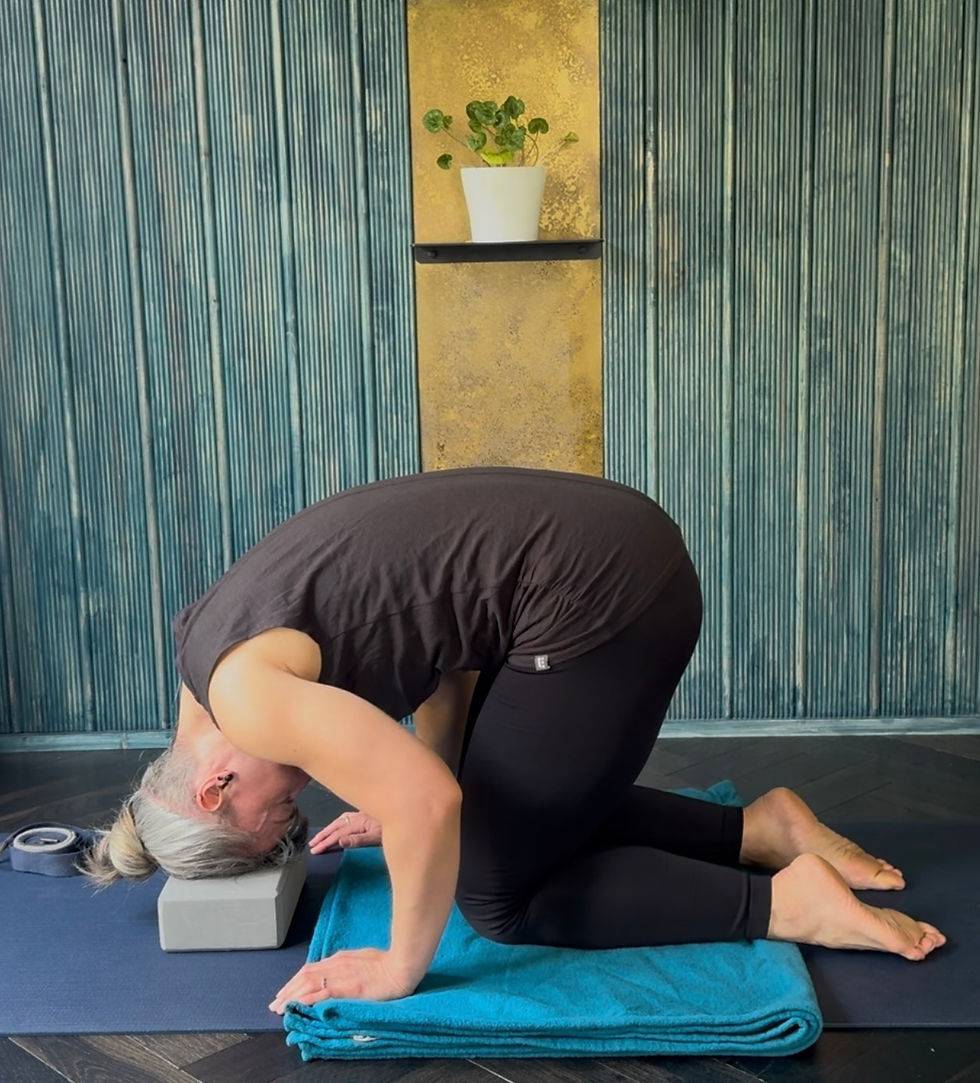
Also known as 'pancake pose' in the non-yoga world, this wide leg forward fold is a wonderful spine lengthener as you get your legs out of the way in order to stretch your torso towards the floor. As with so many other yoga poses, how you execute it is dependent upon your anatomy, as the hips and spine need to be arranged in such a way that you can flatten yourself forwards easily if you are to get your torso to the floor (let alone stretching the soft tissues). As a result, I prefer this pose's Yin Yoga cousin, dragonfly pose, where we use a bolster to support your head and passively lengthen the spine and open the hips at your body's range of movement.
Supta Vajrasana (reclined hero or saddle pose)- best front body stretch

Kneeling in hero pose may be a strong stretch for the front of your legs, and if you're comfortable enough to lean back onto your forearms from there you will extend that opening all the way up the front of your torso, perhaps eventually getting your shoulders to the floor. This pose is a wonderful counter to all the sitting and hunching forward that we do every day, but don't be put off if it feels intense- short, regular practice can release serious tension from the front of your body.
Supported reclined butterfly- best relaxation pose

Supported using a bolster, blocks and a blanket at least, this is a heart opening position with a hip opener that should make you feel held and deeply comfortable. It’s great for restorative stress relief and for the end of a yoga practice to leave you feeling rested and uplifted. Take time to set it up, and give yourself permission to stay there as long as long as you need to feel the relaxing benefits.
Vajrasana toe squat ("screaming toe pose")- best toe stretch and stress reliever

Oh my word, this is the one simple way to bring intensity into your yoga practice. It's great for those times you feel stressed and just need to get more out of your head and into your body. Toe stretch is not named screaming toe pose for nothing and for most of us, holding it for 60 seconds is a real test of mettle. Regular practice had great benefits however as modern toes are usually squished into neat shoes that leave them weak and under exercised (see my post on barefoot shoes) and strong, stretchy toes have big implications for better balance. Roll over plank challenge, how long can you hold a toe squat for??!
Ustrasana (camel pose)- best back bend

A much more active pose than Supta Vajrasana, camel lets you know how strong as well as how stretchy you can be along the front of your body. It can feel quite intense, so dial it in with regular practice until you feel comfortable dropping your hands down to your heels whilst actively pushing your hips forward. Ustrasana works the deep core in the opposite direction to Navasana.
Siddhasana (accomplished pose)- best meditation pose

A solid seat is the real foundation of meditation practice. Siddhasana stabilises your hips using wide knees that bring the heels into line with the centre of your pelvis. Traditionally you'd effectively sit on the heel that's closest to your pelvis (it meets the perineum) but in modern practice it's more common to sit on a block or meditation cushion to comfortably get the same support. Siddhasana eliminates the pressure that can build up in the ankles over time in a cross legged position, although it's harder to hold if your hips don't open easily.
Kurmasana (tortoise pose)- most unusual seated yoga pose

Kurmasana is a sort of extension of Upavistha Konasana forward fold where you shimmy your arms under your knees as you send your torso to the floor. I won't lie, it's a weird one, but fun to try if it's available in your body. As far as poses named for animals go, I really get this one, as the resulting pose if you get into full pancake and spin your hands round behind you, does resemble a tort!
Padmasana (lotus pose)- most inaccessible pose

OK so this is a seated pose this yoga teacher wouldn't recommend- non-yogis might imagine we spend all day sitting in Padmasana but I think this is the one seated pose that 90% of yoga practitioners don't do. It requires hip, knee and ankle flexibility at greater than functional ranges before we even get into the realms of muscular legs or bigger bodies. There is an even less accessible version in Ashtanga yoga where you thread your legs into lotus around your arms (seriously?!) and then rock forward into an arm balance (ie standing on your hands) in this pretzel position. Excuse me if I take Savasana instead, I think I get more out of a nice lie down!
Want to explore more seated yoga poses?
Come practice with me in person in Alwoodley or book a 1-1 session to really get a personalised practice.


Comments